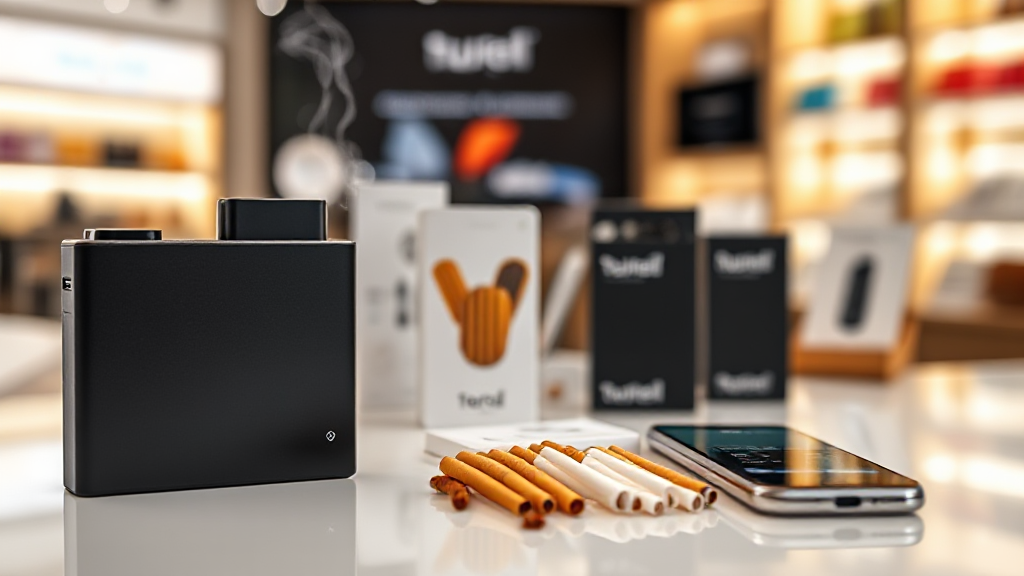
Why Terea Online Orders Fail for Most Buyers and How I Fixed Mine
If your first attempt at buying terea online ended in a cancelled order, a vague shipping notice, or a device that arrived without matching sticks, you are not the problem. The problem is that most people search for Terea, click the first result that looks legitimate, and never check whether that shop actually stocks the specific variants, ships to their country, and handles payment in a way that protects the buyer. I tested this the slow way, with real orders, real tracking numbers, and two failed deliveries before I found a method that worked. This is what I learned, written for anyone who tried the usual route and got burned.
Terea is one of the most requested stick lines among heat-not-burn users in Europe, and that demand has created a messy secondary market. Plenty of sites list Terea products they cannot actually supply. Others ship from outside the EU, which means customs delays, surprise fees, or a package that simply never moves. The fix is not finding a secret shop. The fix is knowing exactly what to verify before you pay, and then sticking to that checklist every single time.
What Actually Goes Wrong When You Order Terea Online
The failure pattern is remarkably consistent. I logged every problem I hit and every problem reported by other buyers in the same position, and almost all of them fall into four buckets.
The first is stock mismatch. A product page says a variant is available, you pay, and then you get an email saying it is out of stock and your order is partially cancelled or refunded days later. This happens because many shops list the full Terea range as a catalogue without syncing it to real inventory. The page looks complete, but the warehouse is not.
The second is country restrictions. Some sellers quietly exclude certain European countries at checkout, or they accept the order and then cannot legally ship tobacco-adjacent products into your market. You only discover this after payment, when the refund takes a week to process.
The third is payment friction. Cards get declined because the merchant is flagged as high-risk, or the shop only accepts methods you do not use. When a payment fails mid-checkout, it is easy to assume the whole shop is fake, but often it is just a poorly configured gateway.
The fourth, and the most frustrating, is delivery that stalls. A tracking number is generated but never updates. The parcel sits in a sorting hub, or it crosses a border and stops. For heat-not-burn sticks, which are time-sensitive and often bought in bulk, a stalled delivery is worse than a clean rejection because you have already committed the money.
How I Tested Shops Before Trusting Them With a Real Order
After two bad experiences, I stopped ordering blind. I built a short verification routine that takes about ten minutes and has saved me from at least three more failed purchases.
First, I check whether the shop has a clear physical or operational footprint in Europe. A real e-commerce operation selling heat-not-burn devices and sticks usually states where it ships from and which countries it serves. Vague or missing shipping information is a red flag, not a stylistic choice.
Second, I look at how the product categories are organised. A serious retailer separates devices from consumable sticks and groups sticks by line and variant. If everything is dumped into one long page with no structure, the shop is probably a reseller scraping listings from somewhere else.
Third, I test the checkout up to the payment step without completing it. This reveals accepted payment methods, whether my country is supported, and whether the shipping cost appears before I commit. If the site hides costs until the final click, I leave.
Fourth, I check for a real contact route. Not a form that goes nowhere, but an address, a support channel, or at least a documented response time. Shops that sell regulated-adjacent products and plan to stay in business tend to be reachable.
This routine is boring, and that is the point. It replaces hope with evidence.
Why the Usual Advice About Buying Sticks Online Does Not Work
The standard advice you find in forums is to buy from the cheapest listing and use a payment method with chargeback protection. That advice assumes the shop is honest but slow, and that the only risk is a late parcel. In reality, the bigger risk is a shop that never had the stock in the first place.
Chargeback protection helps after a disaster, but it does not prevent the disaster. It also does not help if the shop ships a partial order and then goes quiet, because proving what was missing takes weeks. And it does nothing at all if the parcel is seized or held at a border because the seller shipped from the wrong jurisdiction.
Another piece of common advice is to order small first. That is sensible, but it fails when the minimum order value is high or when shipping costs make a small order uneconomical. I tried the small-order test twice and both times the shipping fee was nearly as much as the product, which made the test pointless.
What actually works is verifying supply and shipping before payment, not after. That is the shift that changed my results.
The Details That Separate a Working Order From a Failed One
Once I had a shortlist of shops that passed the basic checks, I looked at the details that decide whether an order completes cleanly.
Variant accuracy. Terea comes in many variants, and buyers care about the exact one. A shop that lists variants clearly, with consistent naming, is more likely to ship what you selected. A shop that uses vague labels or mixes variants in one listing is a coin flip.
Inventory honesty. The best signal is a shop that marks items as unavailable rather than accepting orders it cannot fill. If a site shows real availability, your order is far more likely to ship the same or next day.
Shipping origin and route. For European buyers, a seller that ships within Europe avoids customs surprises. Cross-border shipping inside the EU is generally smoother than parcels arriving from outside the bloc, and the tracking is more reliable.
Payment handling. A shop with secure, standard payment options and a clear refund policy is easier to deal with if something goes wrong. I now treat payment clarity as a proxy for overall operational competence.
Order communication. Confirmation emails, dispatch notices, and tracking that updates within a reasonable window all matter. Silence after payment is the single strongest warning sign I have found.
None of these details are exotic. They are just the things most buyers skip because they are in a hurry.
What I Changed in My Own Ordering Routine
The biggest change was slowing down at the start instead of at the end. I now keep a short list of shops that have passed verification, and I re-check that list every few months because stock, shipping rules, and payment options change.
I also stopped chasing the lowest price. The cheapest listing is often cheap because the seller has no real inventory and is hoping to source after the sale. Paying a small premium for a shop that actually holds stock is cheaper than losing a week to a refund.
I started ordering in quantities that match my real usage rather than panic-buying large batches. Large orders increase the loss if something goes wrong, and they also trigger more scrutiny at borders in some markets. A steady, moderate order pattern has been more reliable for me than stockpiling.
Finally, I document everything. Screenshots of the product page, the order confirmation, and the payment receipt. This sounds excessive until you need to prove what you ordered. It has resolved two disputes for me in under a day.
How to Apply This If You Are Starting From Scratch
If you have never successfully ordered Terea online, start with one shop and one modest order. Verify the shipping destination and the payment method before you commit. Watch how the shop communicates after payment. If the confirmation arrives promptly and the tracking updates within a couple of days, you have found a keeper.
If the order stalls, do not wait silently. Contact the shop through its documented channel and ask for a specific status. A shop that responds with real information is worth a second chance. A shop that sends a generic reply or ignores you is not.
If the order fails entirely, treat it as data. Note which check it failed, and add that check to your routine. Over a few orders, you will build a personal shortlist of shops that work for your country and your payment method, and the whole process becomes routine rather than risky.
The core lesson is simple: buying Terea online is not hard because the product is hard to find. It is hard because most shops are not built to deliver it reliably. Once you filter for the ones that are, the experience stops being a gamble and starts being an ordinary purchase. That is the outcome worth aiming for, and it is entirely achievable with a bit of upfront verification and a willingness to walk away from a bad listing.